Hastelloy B2 & Hastelloy B3 Stud Bolts Supplier & Exporter in USA, UAE, Saudi Arabia & Europe
Industrial systems operating under highly aggressive acid environments require fastening materials capable of resisting chemical degradation that quickly damages conventional stainless steel fasteners. Aurum Overseas manufactures premium corrosion-resistant fastening solutions engineered specifically for critical chemical processing applications where long-term reliability, acid resistance, and structural stability directly affect operational safety and equipment lifespan.
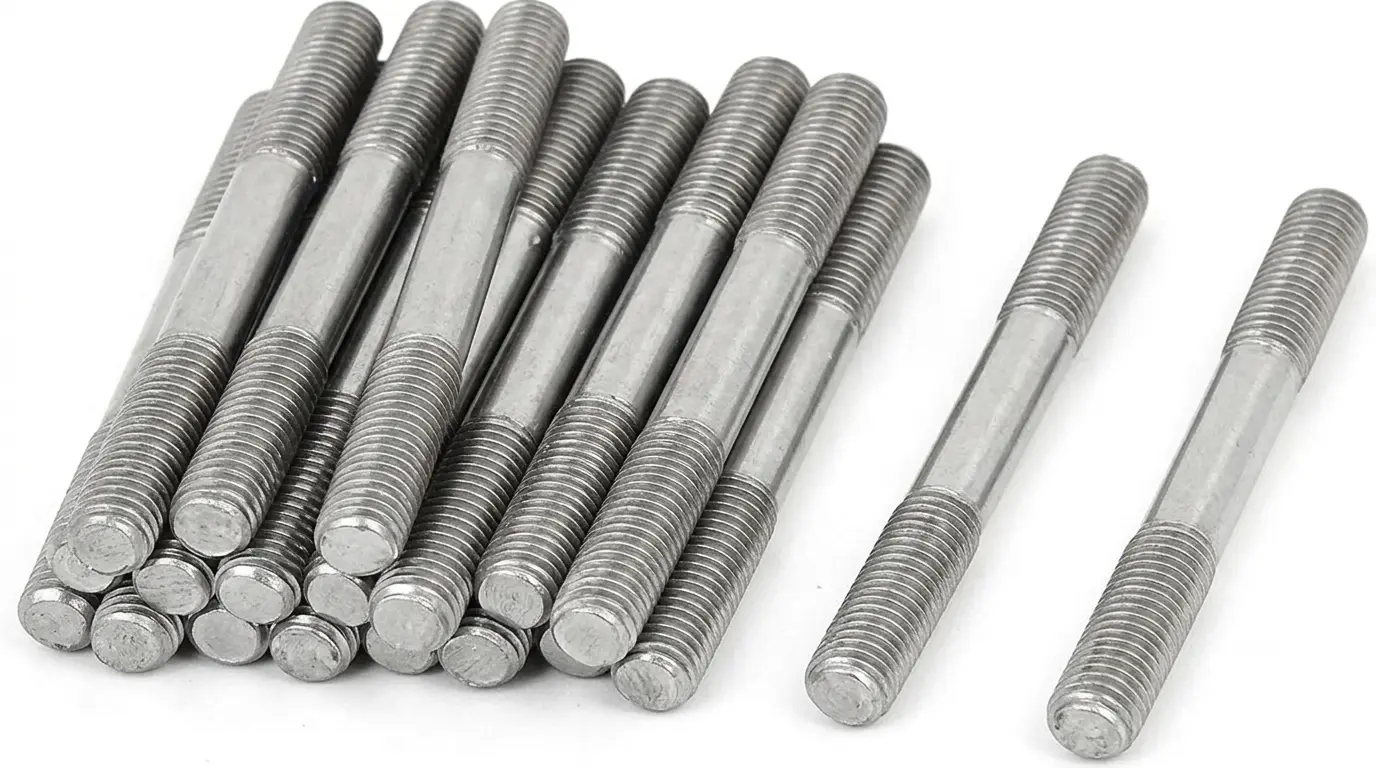
Hastelloy B2 Stud Bolts and Hastelloy B3 Stud Bolts are widely used in industrial applications exposed to strong reducing acids, hydrochloric acid environments, sulfuric acid systems, and highly corrosive chemical processing conditions where standard alloy fasteners often fail prematurely. Because of their nickel-molybdenum alloy chemistry, these fasteners provide exceptional resistance against acid attack while maintaining excellent mechanical strength under highly demanding industrial service conditions.
What are Hastelloy B2 and B3 Stud Bolts?
Designed for highly specialized chemical processing environments, Hastelloy B2 Stud Bolts and Hastelloy B3 Stud Bolts are premium nickel-molybdenum alloy threaded fasteners developed specifically for industries handling aggressive reducing chemicals where corrosion resistance directly impacts long-term equipment performance. Unlike conventional stainless steel fasteners, these alloys perform exceptionally well in hydrochloric acid service conditions where severe chemical attack can rapidly damage ordinary fastening materials.
Because of these material properties, Alloy B2 Stud Bolts and Alloy B3 Stud Bolts are commonly used in acid handling systems, chemical reactors, pressure vessels, pharmaceutical processing units, pollution control systems, and industrial plants operating under highly corrosive reducing environments. For industrial applications exposed to broader mixed chemical environments, buyers also frequently evaluate Hastelloy C276 Stud Bolts, which offer excellent corrosion resistance across oxidizing and reducing chemical service conditions.
Industrial buyers worldwide specify UNS N10675 Fasteners where corrosion resistance, chemical compatibility, and operational safety remain critical procurement requirements.
Product Specifications
We manufacture precision-engineered fastening solutions according to global industrial standards suitable for highly demanding engineering applications worldwide.
| Specification | Details |
|---|---|
| ASTM Standard | ASTM A193 |
| ASME Standard | ASME SA193 |
| Material Grades | Hastelloy B2 / Hastelloy B3 |
| UNS Number | UNS N10675 |
| Size Range | M3 – M56 |
| Imperial Sizes | 3/6″ – 2″ |
| Length | 3 mm to 200 mm |
| Standards | ASTM, DIN, BS, International Standards |
| Custom Sizes | Available |
Why Hastelloy B Grades Are Used in Acid Processing Systems
Fasteners operating inside aggressive chemical systems must withstand constant exposure to highly corrosive acids capable of degrading standard alloy materials over prolonged service periods. Material failure in these environments can result in costly downtime, equipment leakage, reduced operational efficiency, and significant maintenance expenses.
Hastelloy B2 Studs and Hastelloy B3 Studs are engineered specifically for such demanding applications because their high nickel and molybdenum content provides excellent resistance against hydrochloric acid, sulfuric acid, reducing chemical solutions, and localized corrosion damage often found in acid processing environments. These alloys maintain long-term structural reliability even when exposed continuously to aggressive chemical media that quickly damages standard industrial fasteners.
Because of these corrosion-resistant properties, both alloys remain widely used across critical chemical processing industries where acid compatibility directly determines equipment reliability.
Hastelloy B2 Chemical Composition
Understanding Hastelloy B2 chemical composition helps industrial buyers evaluate alloy suitability for highly aggressive chemical processing applications requiring long-term corrosion protection.
| Element | Composition |
|---|---|
| Nickel (Ni) | Balance |
| Molybdenum (Mo) | 26 – 30% |
| Iron (Fe) | 2% Max |
| Chromium (Cr) | 1% Max |
| Carbon (C) | 0.02% Max |
| Manganese (Mn) | 1% Max |
| Silicon (Si) | 0.10% Max |
| Cobalt (Co) | 1% Max |
The high nickel-molybdenum composition allows excellent resistance against hydrochloric acid and reducing chemical environments where conventional alloys often experience rapid corrosion failure.
Hastelloy B3 Chemical Composition
Hastelloy B3 Stud Bolts were developed as an improved version of earlier B-grade alloys, offering better thermal stability, improved fabrication characteristics, and enhanced resistance to stress-related corrosion cracking during industrial service.
| Element | Composition |
|---|---|
| Nickel (Ni) | 65% Minimum |
| Molybdenum (Mo) | 27 – 32% |
| Chromium (Cr) | 1.5 – 3% |
| Iron (Fe) | 1.5 – 3% |
| Tungsten (W) | 3% Max |
| Cobalt (Co) | 3% Max |
| Manganese (Mn) | 3% Max |
| Aluminum (Al) | 0.50% Max |
| Titanium (Ti) | 0.20% Max |
| Carbon (C) | 0.01% Max |
| Silicon (Si) | 0.10% Max |
This advanced chemistry improves alloy stability while maintaining exceptional acid resistance under highly demanding service environments.
Mechanical Properties of Hastelloy B3
The alloy provides excellent structural reliability together with strong corrosion resistance, making it highly suitable for critical industrial applications.
| Element | Hastelloy B2 | Hastelloy B3 |
|---|---|---|
| Nickel (Ni) | Balance | 65% Minimum (Balance) |
| Molybdenum (Mo) | 26 – 30% | 27 – 32% |
| Chromium (Cr) | 1% Max | 1.5 – 3% |
| Iron (Fe) | 2% Max | 1.5 – 3% |
| Tungsten (W) | — | 3% Max |
| Cobalt (Co) | 1% Max | 3% Max |
| Manganese (Mn) | 1% Max | 3% Max |
| Aluminum (Al) | — | 0.50% Max |
| Titanium (Ti) | — | 0.20% Max |
| Carbon (C) | 0.02% Max | 0.01% Max |
| Silicon (Si) | 0.10% Max | 0.10% Max |
Sizes and Dimensions Available
We manufacture multiple fastening configurations suitable for custom industrial engineering requirements.
| Product Type | Size Range |
|---|---|
| Stud Bolts | M3 – M56 |
| Imperial Size | 3/6″ – 2″ |
| Standard Length | 3 mm – 200 mm |
| Threaded Rods | Available |
| Double End Studs | Available |
| Custom Sizes | Available |
Difference Between Hastelloy B3 and Hastelloy B2
Industrial buyers selecting corrosion-resistant fastening materials for aggressive acid processing environments often evaluate the difference between Hastelloy B3 and Hastelloy B2 before choosing the most suitable alloy for long-term service performance. While both grades are engineered primarily for reducing chemical environments and excellent hydrochloric acid resistance, differences in alloy chemistry and metallurgical stability influence performance under demanding industrial operating conditions.
| Property | Hastelloy B2 Stud Bolts | Hastelloy B3 Stud Bolts |
|---|---|---|
| Material Grade | UNS N10665 | UNS N10675 |
| Alloy Structure | Nickel-Molybdenum Alloy | Improved Nickel-Molybdenum Alloy |
| Hydrochloric Acid Resistance | Excellent | Excellent |
| Thermal Stability | Good | Better |
| Fabrication Performance | Standard | Improved |
| Stress Corrosion Resistance | Good | Superior |
| Mechanical Stability | High | Higher |
| Weldability | Good | Improved |
| Best Used For | General Acid Processing | Critical Chemical Systems |
Both Hastelloy B2 Studs and Hastelloy B3 Studs are widely used in acid handling systems and highly corrosive reducing environments, but Hastelloy B3 Stud Bolts are often preferred for more critical chemical processing systems because of improved thermal stability and better long-term metallurgical performance. For applications requiring broader corrosion resistance in mixed chemical environments, industrial buyers also commonly specify Hastelloy C22 Stud Bolts, while high-temperature furnace and thermal processing systems frequently use Hastelloy X Studs where oxidation resistance becomes equally important.
Industrial Applications
The combination of exceptional acid resistance and mechanical durability makes Hastelloy B-grade alloys suitable for highly specialized industrial applications exposed to aggressive chemical service environments.
| Industry | Applications |
|---|---|
| Chemical Processing | Acid handling systems |
| Pharmaceutical Plants | Chemical reactors |
| Petrochemical Industry | Pressure systems |
| Pollution Control | Industrial scrubber systems |
| Heat Exchanger Industry | Corrosive fluid systems |
| Refinery Industry | Chemical process piping |
| Industrial EPC Projects | Corrosion resistant assemblies |
| Specialty Chemical Plants | Acid transfer systems |
Global Supply & Export Markets
Aurum Overseas supplies premium industrial fastening products globally to buyers across United States, Germany, France, Italy, Netherlands, Spain, Poland, Belgium, and United Kingdom, supporting industrial manufacturers, chemical processing companies, EPC contractors, engineering firms, and industrial procurement teams requiring high-performance corrosion-resistant fastening solutions.
We also export worldwide to UAE, Saudi Arabia, Qatar, Oman, Kuwait, Bahrain, Singapore, Malaysia, Australia, South Africa, and South Korea, serving industrial buyers requiring export-grade fastening materials for highly demanding industrial applications.
Why Choose Aurum Overseas
Selecting fastening materials for aggressive acid processing systems requires a manufacturing partner capable of maintaining consistent material quality, dimensional precision, strict compliance standards, and dependable global supply capabilities. Aurum Overseas supports industrial buyers worldwide with premium fastening solutions manufactured specifically for demanding corrosive service environments.
Our production capabilities focus on dimensional accuracy, alloy consistency, testing compliance, export documentation, project-specific manufacturing requirements, and dependable industrial supply support for highly critical engineering applications worldwide.
Every product is supplied with inspection certificates, material traceability documents, test reports, and technical support required for industrial procurement approvals.
Frequently Asked Questions
1. What are Hastelloy B2 Stud Bolts used for?
Hastelloy B2 Stud Bolts are widely used in acid processing systems, chemical reactors, pharmaceutical
plants, refinery systems, and industrial applications exposed to hydrochloric acid and highly corrosive
reducing chemical environments.
2. What are Hastelloy B3 Studs used for?
Hastelloy B3 Studs are commonly used in highly aggressive acid processing systems where superior
corrosion resistance, improved thermal stability, and long-term material reliability are required.
3. What is Hastelloy B2 chemical composition?
Hastelloy B2 chemical composition primarily contains high nickel and molybdenum content, allowing
exceptional resistance against hydrochloric acid and aggressive reducing chemical environments.
4. What is the difference between Hastelloy B and Hastelloy B2?
When comparing Hastelloy B vs Hastelloy B2, the B2 grade offers improved corrosion resistance, better
chemical stability, and stronger industrial performance under modern chemical processing conditions.
5. Are UNS N10675 Fasteners suitable for acid processing plants?
Yes. UNS N10675 Fasteners provide excellent resistance against hydrochloric acid and highly aggressive
reducing chemicals, making them highly suitable for chemical processing applications.
6. Do you manufacture custom sizes and specifications?
Yes. Aurum Overseas manufactures Hastelloy B2 and B3 Stud Bolts in custom diameters, lengths, thread
configurations, and project-specific industrial requirements for acid processing and chemical
applications.
Request Technical Support & Pricing
If you are sourcing premium nickel alloy fastening solutions for chemical processing plants, acid transfer systems, pharmaceutical plants, pressure systems, refinery applications, or industrial projects requiring exceptional acid corrosion resistance, our technical team can assist with product selection and engineering consultation.
Contact Aurum Overseas for product availability, export supply support, technical assistance, and commercial quotations for domestic and international industrial procurement requirements.
Request a Quote